Whether due to political instability, armed conflict or global warming, contemporary crises are increasingly exposing maritime gateways (straits, shipping channels) to unexpected disruptions in traffic. Faced with these imponderables, the maritime transport system — 80% of the volume of world trade in goods, according to UNCTAD (United Nations Conference on Trade and Development) — is adaptable, but only up to a certain point. While the costs caused by temporary shocks can be absorbed, more serious disruption scenarios could have a significant impact on international trade and global economic stability.
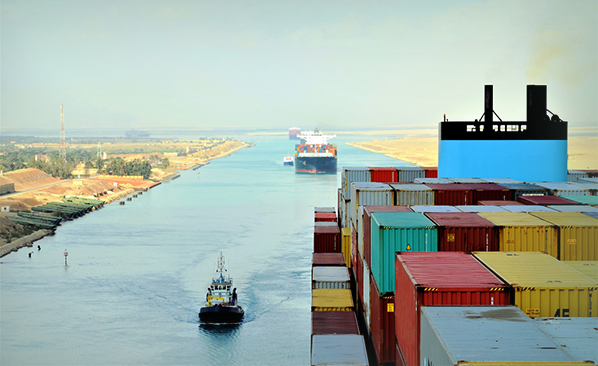
There are around 200 narrow passages, navigation channels or maritime straits in the world. Strategic chokepointsby definition, shallow and narrow, controlling the opening of major shipping lanes, these bottlenecks, linking two bodies of water located along international maritime lines of communication, can be responsible for congestion or even a halt in traffic. Disruptions can be circumscribed and temporary, as in the case of the Ever Given incident in 2019, a 400-metre supertanker grounded in the Suez Canal.[1] They can also be long-lasting and far-reaching, following international sanctions for example. Finally, they can have systemic and global implications, calling into question the world economy, such as a hypothetical scenario involving a blockade of the Strait of Hormuz, through which 20% to 30% of the world’s crude oil passes every year. While almost 90% of the oil produced in the Persian Gulf leaves the region on tankers that have to pass through this 55-kilometre-wide bottleneck, none of the existing land-based solutions — pipeline, oil pipeline, lorry — would offer a viable alternative in the event of a closure.