
A Handbook of Futures Studies was published this summer. Edited by Roberto Poli (Professor of Philosophy of Science at the University of Trento, Italy), the book aims to show how futures studies contribute to understanding and managing the present. It brings together authors from a wide range of backgrounds, including some of the ‘tenors’ of foresight (Sohail Inayatullah, Riel Miller etc.), all of whom reiterate what regular readers of Futuribles no doubt already know: by projecting themselves into the future on the basis of an examination of the present situation, individuals and organisations can develop their abilities to analyse, assess and ultimately make better decisions.
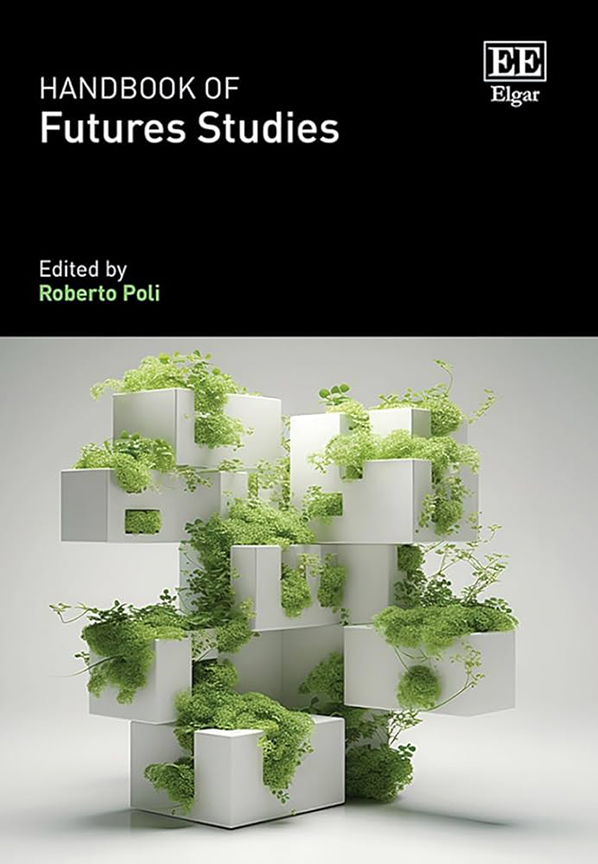
Bringing together experts from a wide range of disciplines, this handbook demonstrates the links between futures studies and related disciplines such as sociology, anthropology, cognitive science and economics. It is divided into six main sections: “Understanding Futures Studies”; “Using Futures Studies”; “Policy Foresight”; “Corporate Foresight”; “Selected Social Foresights”; and a conclusion in the form of a utopian tale by the book’s coordinator, Roberto Poli.
Over the course of the chapters that make up these six parts (35 in all), the authors discuss the value of foresight studies in public institutions, explore the need for better foresight in companies, and endeavour to clarify the difference between Futures Studies and Anticipation Theory. The themes covered range from defence to gender, education, management, science fiction, climate, cities etc., with contributions focusing more specifically on foresight methods. Readers can access the detailed table of contents by clicking on this link.

Finally, pointing out that focusing on the past has often elicited division and fragmentation, the Handbook of Futures Studies argues that working and focusing on the future, and on emerging issues, can, conversely, create a greater convergence of views.
This major work in the field of foresight is an indispensable tool for academics, researchers and students specialising in this discipline, as well as specialists in related fields such as sociology, anthropology, psychology and economics. It is also a major resource for those in charge of strategic functions who are on the lookout for emerging topics or who wish to access a broad panorama of studies of possible futures.
Reference: Poli Roberto (ed.), Handbook of Futures Studies, London: Edward Elgar Pub, July 2024, 542 p.
——————–
N.B.: this article has been translated from French by DeepL, and revised by the author and Futuribles.


