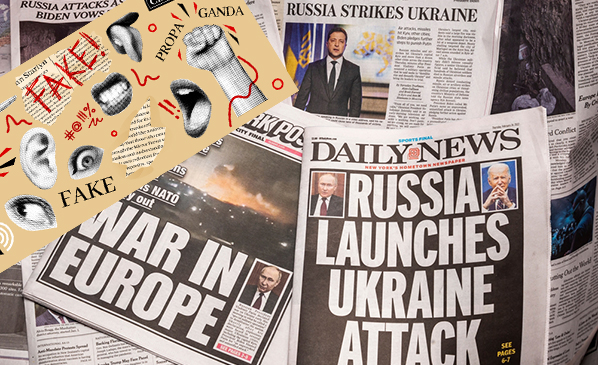
In the long history of strategic surprises, the first high-intensity war of the 21st century has taught us a great deal about the cognitive biases that regularly cloud the judgement of decision-makers.
Faced with the massive deployment of Russian troops near Ukraine’s borders — by autumn 2021, Moscow had massed almost 90,000 soldiers near the Ukrainian border — many, if not most experts, predicted a decoy designed to obtain symbolic concessions or to seize a small portion of the Ukrainian territory by means of a fait accompli, as was the case with Crimea in 2014. The latter were stunned by Vladimir Putin’s decision to attempt the total annexation of the country on 24 February 2022. From military exercises to sabotage to false flags — false incidents designed to lead the Ukrainian government to launch a war it never wanted — Ukraine has faced an intense campaign of pre-invasion actions designed to break the morale of its population and army in the run-up to 24 February. Faced with such an accumulation of alarming signals, how can we explain the persistent scepticism of certain international decision-makers who have had access to crucial information? What does this reveal about the capacity of nations to respond effectively to serious and imminent threats?


