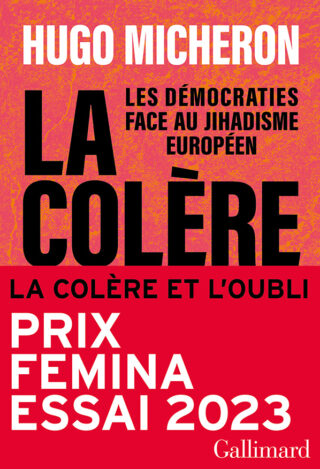
Since the beginning of the war in Syria, six thousand Europeans have traveled to the Levant to fight alongside Daesh and the al-Nusra front. How did a marginal phenomenon, born in Afghanistan during the Soviet occupation, become so prevalent? By what processes of Salafi-jihadi ideology did it spread through Europe to the point of producing a “new Islamic identity,” adopted by certain Muslims, which condemns the values of European societies and threatens their cohesion, and so their democratic foundations?
Hugo Micheron is a doctor of political science and lecturer at the Sciences Po Paris School of International Affaires. He has been studying jihadism in France since 2015. In this book (Anger and Forgetting: Democracies in the Face of European Jihadism), he extends his field of study to the whole of Europe and attempts to analyze how this murderous ideology has evolved, ebbing and flowing in response to the international context and local environments. Periods of attacks alternate with phases of restructuring during which militants adapt and perfect their discourse and their preaching and recruitment techniques. The author hopes that his analysis will provide political leaders and the general public with the tools to anticipate the threat, rather than simply enduring it.
Micheron distinguishes three phases. The


