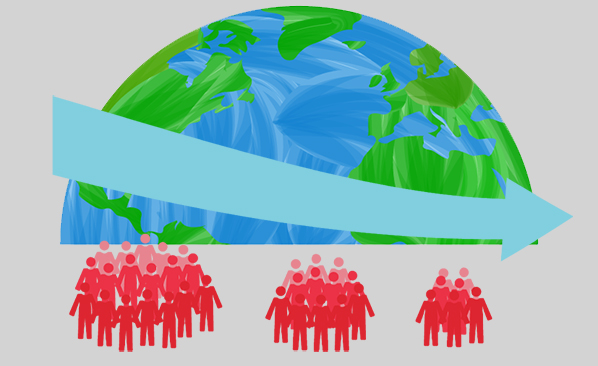
Like education, health is now acknowledged as a crucial field where socio-economic development is concerned — an investment for the future. Nevertheless, disparities in health (on a global but also a more local scale) linked to living conditions and incomes remain enormous and the prospects for generalized good health are still, in large measure, utopian. Given the many actors involved in the health field, conditions that vary greatly from one country to another, and the diversity of health policies implemented, it is hardly possible to know precisely how world health will evolve up to the period 2030-2050.
On the other hand, as Louis-Charles Viossat stresses here, a number of deep-seated trends have been at work for some years and should be confirmed by that point. This is the case, for example, with the lastingly globalized nature of health (internationalization of the economic actors; mobility of patients and practitioners; increased range of institutional actors and funders etc.), and also with the trend for health expenditure to grow, both in the countries of the North and the South, as a result of population-ageing, of socio-economic development, but also — and primarily — of a rise in the costs of health goods and services. Lastly, there is another, more worrying, deep-seated trend. This is the emergence or re-emergence of pandemic risks and infectious diseases that are difficult both to anticipate and to contain when they occur, among other things because of the mobility of individuals and commodities in the age of globalization and increased resistance to existing treatments.