In this book [Artificial Intelligence, Human Intelligence: The Double Enigma], Daniel Andler sets out his stall right from the outset. Human intelligence is one enigma, artificial intelligence (AI) another, but neither of them is a mystery, and that is what he endeavors to prove. The reader will be the judge, but the merit of his approach lies above all in the fact that it clarifies exactly what is under discussion, identifies its roots, and deciphers its ramifications and their implications. AI is emerging as one of the most radical technological revolutions in human history.
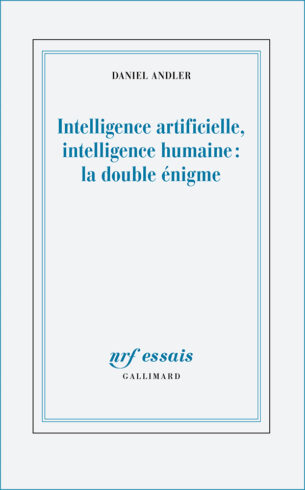
The first of the book’s two parts provides an analytical overview of the genesis of AI, right up to its latest developments. First of all, a word about terminology. The author proposes to use the expression “artificial intelligence” — an oxymoron based on woolly concepts — as a new term for a tangible reality, just as we use the word “crowbar” without questioning the relationship between the “crow” and the “bar.” He then uses this term to mean, in turn, AI in the strictest sense, limited to the academic and professional sphere; an abbreviated form of AI that covers applications and algorithms based on deep learning; and finally, AI in the broadest sense, which encompasses all the contributions made by digital technologies to the performance of any given task. AI thus appears to be the driving force behind the digital ecosy