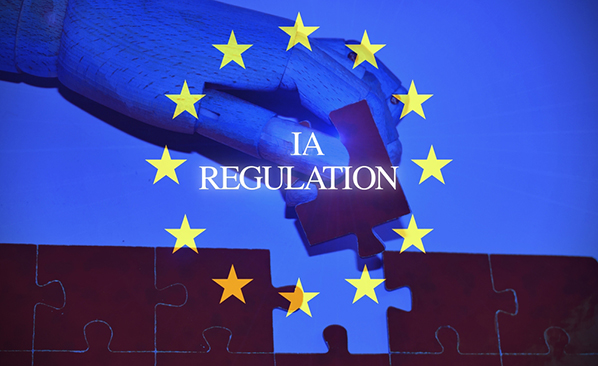
“Historic! With the political deal on the AI [Artificial Intelligence] Act sealed tonight, the EU [European Union] becomes the first continent to set clear rules for the use of AI” said Thierry Breton, the European Commissioner for the Internal Market, on December 8, 2023. He welcomed the European agreement reached between the three European Union bodies (Council, Parliament and Commission), which paves the way for the formal adoption of an EU Artificial Intelligence Act in the coming weeks, and application two years after the decision.[1]
In practice, this is an important step towards the spread of trusted artificial intelligence in the Union, one of the cornerstones of Europe’s digital transition agenda. The process was launched in April 2021 with a proposal from the European Commission articulated in three parts: a text of general guidelines, a plan coordinated between the Member States and a proposal for an AI Act.
The different types of AI risk
- Unacceptable risks (with regulated exceptions): these are AI systems that threaten individuals, such as cognitive-behavioural manipulation, social scoring or biometric identification and categorisation.
- The high risks concern AI systems that negatively affect safety or fundamental rights, either because they are involved in products covered by European legislation, such as toys, aviation, cars, medical devices and lifts; or because they are involved in the