Continuing the series on the sea and the oceans, this interview with Bernard Kalaora offers readers something markedly different from our usual articles. It looks from a philosophical and anthropological, but also a poetic, angle at what the marine space has contributed — and can still contribute — to our profoundly landbound societies. Examining the way perceptions of the sea have changed over time, in literature, painting, scientific representations and the like, Kalaora stresses the importance of living things and the interactions between all the elements of life, together with the need to accept uncertainty, risks and mystery. He presents us with a genuine lesson in ecology, aiming to sensitize us, in the current context of climate change and the finite nature of our planet, to the wealth of resources the ocean can contribute as part of a lasting new alliance between humanity and nature. Comparing Bernard Kalaora’s words with what we have seen in Glasgow during the 26th conference of the parties to the UN Framework Convention on Climate Change (COP26) in terms of the undertakings made by states — a million miles from the measures that need to be put in place — we can see the challenge a genuine ecological transition represents!
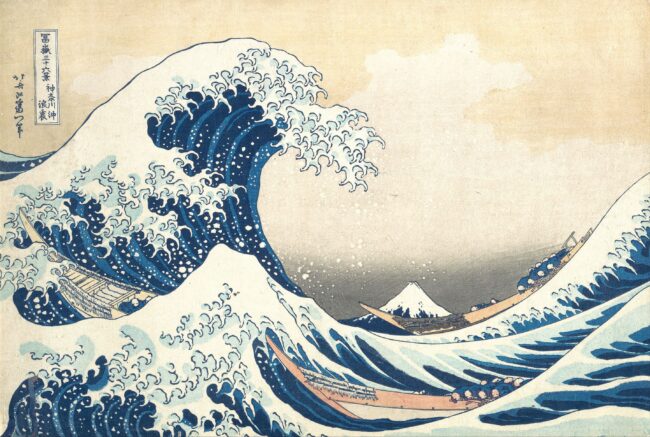
La Grande Vague de Kanagawa, de Hokusai, 1831
This article is published in Futuribles journal ,