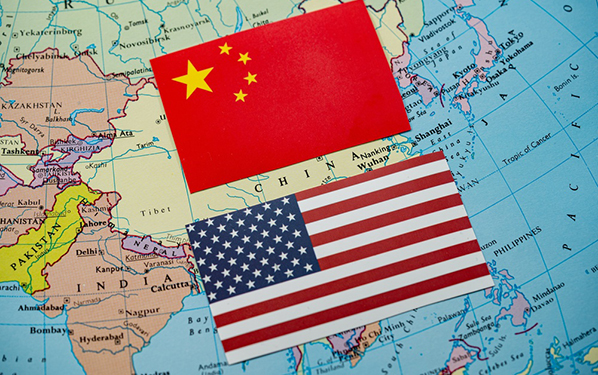
Is it still possible to undertake foresight studies in the contemporary world, assessing its potential issues, challenges and developments? With the end of the Cold War, the collapse of the Soviet Union and the terrorist attacks of September 11th 2001 – enormous changes that nobody really foresaw – the question is worth asking.
Frédéric Charillon argues that it is not only possible but indeed necessary to give ourselves the means of trying to predict the future of international relations. Here he offers some tools for deciphering the situation of a sociological nature, criticizing the theory of the clash of civilizations as too simplistic. He first sets out the main issues that need to be considered when analysing tomorrow’s world and the cleavages within it that they are likely to generate; he goes on to make a series of observations about the current international situation, highlighting the confusion of models, the ever more frequent abrupt changes, and increasing complexity of the world and how it is represented…
Hence the three main questions about the future of the world analysed by Frédéric Charillon: is there still some system for looking at the future and, if so, what is it? How do we set about understanding international situations if they cannot be explained? Is making culture the focus of the analysis really the best way of capturing the dynamics of the modern world?
Hence, too, the three sociological questions on which he ends: is it better to simplify the reality in order to be able to act or to attempt to understand the complexities before doing anything? Is it better – in both analysis and action – to go for sudden change or for continuity? Is it better to emphasize explanations in terms of the individual or the group?
What Is the Best Approach to Foresight in a Paradoxical World?
This article is published in Futuribles journal ,