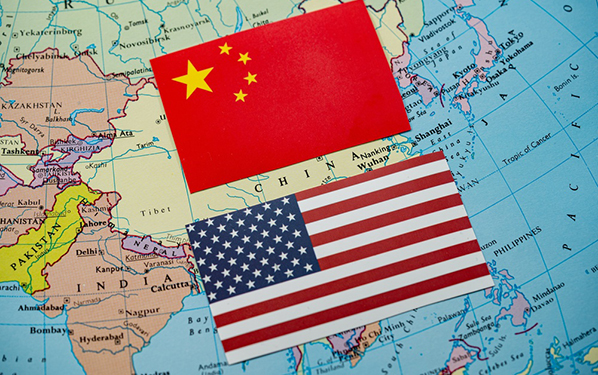
It is more than 15 years since the USA (then under the Obama administration) made a ‘pivot’ towards Asia in its diplomatic strategy, doing so out of anxiety over the economic and military development of China and its growing regional and international assertiveness. Sino-American rivalry is, therefore, very much a structural factor economically, industrially, technologically, and militarily in the diplomatic relations of most Asian countries. However, in a context of increased tension between Beijing and Washington, pressure is building and each country is at pains to preserve its security guarantees and economic advantages. How does this express itself in concrete terms and how are strategic balances changing—or how might they change—in Asia?
It is these very questions that Arnaud Leveau examines in this article. After detailing how the practice of creating strategic power balances has developed, and the new configurations that have come about in the major Asian countries, he shows how alliances between regional actors—and with the world’s major powers—are structured, and points to developments that are currently ongoing or in the pipeline, mainly in response to the instability of American diplomacy in recent years. In his view, a trend is emerging: a trend toward flexibility, expressed in a ‘tri-lateralization’ of relations and the development of issue-based mini-coalitions. Lastly, Leveau outlines three scenarios that may play out in the years to 2035: more rigid bipolarity, fragmentation into regional blocs, or selective interdependencies within a network of mid-range powers (the latter seeming to him the most plausible in the current context).
The article is downloadable only in French. It is not available in English.