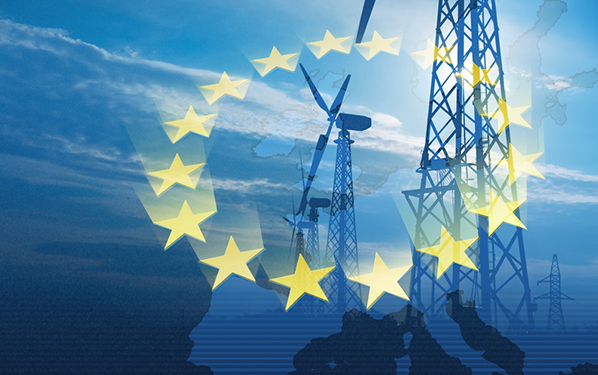
In just a few years, since the beginning of the 2020s, the context of relative socio-economic and geopolitical stability that prevailed in Europe has been shattered, giving way to what is now termed polycrisis. Along with Covid, we have seen war in Ukraine, the return of protectionism in the USA, and Israeli-American intervention in Iran with all the ensuing consequences that have no very clear end to them, especially when it comes to energy supply. In light of the vulnerabilities that have emerged—and against a backdrop of accelerating climate change and China’s leadership in green technologies—issues of energy sovereignty, decarbonization, and strategic autonomy are now major items on Europe’s agenda. These need to be properly monitored and assessed if the EU and its member states are to be able to factor them into their political strategies. To this end, a new consortium bringing together a number of research and analytical bodies (including Futuribles) has just been created: the observatoire Géopolitique de l’énergie et Europe puissance (GEEP). This collective article introduces the main actors and the overall objective—namely, to “assemble, structure, and analyse a coherent set of indicators that are able to inform European strategic choices, ground public debate in evidence, and track over time the credibility of the pathways being pursued.” The authors also outline the Observatory’s priority analytical themes with regard to transition trajectories and the governance of energy sovereignty, as well as the levers available to Europe for establishing itself as a leading geopolitical and geo-economic power in the decarbonization field.
The article is downloadable only in French. It is not available in English.