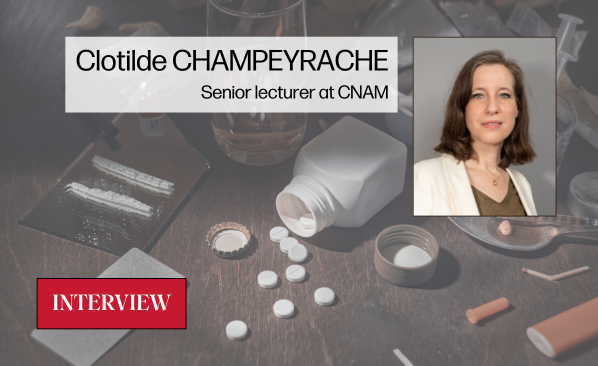
Various events and recent news (highlighting the growing influence and corruption of criminal organisations in Belgium and the Netherlands, the French government’s announcement that customs would be stepped up to deal with the increasing infiltration of French ports by drug mafias, the growing number of settlements of scores in the south of France etc.) tend to show that mafias are occupying an increasingly large area in Europe, and no longer just in Italy. Is this media coverage proportionate to reality? Is the weight and influence of criminal organisations on legal institutions increasing? And what are the risks of this trend becoming more pronounced? To shed some light on these questions, Marie Ségur interviewed Clotilde Champeyrache, a specialist in these issues at the Conservatoire national des arts et métiers.
Are there any recent signs of an increase in drug-related crime in Europe?
C.C.: Yes, drug trafficking is booming on the European continent,[1] as it is everywhere else in the world. There are several reasons for this:
• The globalised liberal economy has been a facilitating factor in the trafficking of drugs and counterfeit medicines, thanks to the increase in the flow of goods, which means that larger volumes of products can be moved, but also because the logic of profit has taken precedence over security policies. The Port of Rotterdam Authority 2021 annual report is a perfect example. In it, the port authority tends to shirk its responsibility for the criminal activities that may take place in the port: “Tackling subversive crime is a challenge facing society as a whole that, strictly speaking, is not the responsibility of the Port of Rotterdam Authority”.[2] In this report, the port defends its competitiveness by highlighting the massification of flows, with an average rate of one container handled every six seconds. To slow down this rate for controls would be to risk losing money and customers to other ports. The reaction of the port’s management is entirely revealing of the attitude of certain players in the legal economy, who only comply with the law according to a cost-benefit calculation in which the financial interest in defrauding or complying with the rules is assessed as a priority, far more than moral issues. More generally, it can be said that the relationship between the law and ethics is eroding in European societies. This is particularly true in France where, on an individual level, we are seeing an increase in refusals to comply with police orders, for example.
• At the same time, this growth in drug trafficking can be explained by the diversification and normalisation of drug use — some users, for example, take cocaine to keep up with the pace of work — as well as by the diversification of the supply itself and its greater accessibility, with a variety of products making it possible to adapt to supply shortages and user profiles (more or less young, more or less financially well-off); and undoubtedly also by the entrenchment of a certain social malaise in European societies, which explains the development of addictions.
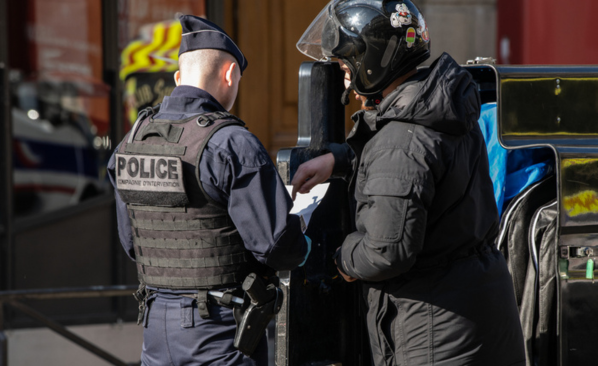

The media regularly attribute to supposed ‘mafias’ the outrages (settling of scores or mass arrests by the police) linked to this trafficking.[3] But in your research, you stress the importance of the very definition of the term ‘mafia’. Could you give us that definition again and explain why you don’t think it should be used indiscriminately?
C.C.: There is really only one country in the world, Italy, which has legally defined the mafia, in article 416bis of its penal code. Paragraph 8 lists the specific characteristics of these networks:
- Mafias exploit their associative power, building themselves around a principle of hierarchy, affiliation and therefore subjection. Among other things, this enables them to guarantee an omerta, a law of silence that protects their members and their activities.
- Naturally, mafias commit crimes, but Italian law does not specify which ones. This is a fundamental point: mafias do not restrict themselves to one particular form of trafficking, such as drugs, but rather cover a broad spectrum of crime.
- Mafias have the capacity to infiltrate and condition the legal sphere on two levels: economic and political, for example by bribing politicians and manipulating voting in the territories they control. What we need to remember here is that mafias are not impervious organisations, quite the contrary. We must get away from the illusion that they operate in a closed circuit. Moreover, Italy has added, for the time being through case law, the “offence of external assistance in a Mafia association”, precisely to cover this grey area, i.e. all those people who are not directly involved in the Mafia but help it or participate in its activities consciously, in one way or another.
This definition of the mafia is important for at least two reasons:
- It makes it possible to distinguish real mafias – structured, experienced, legitimised, and discreet because they are very well integrated into the social fabric – from other criminal organisations, more or less experienced, which often attract media attention for their acts of violence, but which are in reality less dangerous because they are more visible and therefore easier to dismantle. However, security policies tend to focus on these groups, which in reality does not make it possible to tackle the real roots of the offences and crimes committed in a given area. The world of organised crime covers a continuum of organisations that it is important to be able to name and distinguish.
- It helps us to understand why mafias are at the very top of the criminal hierarchy. Mafias are the elite model to which many other organisations aspire. This makes it possible to study in more detail the relationships that these players have with each other, as these groups cooperate and improve, in particular by imitating mafia practices. The recent rise in power of the Albanian clans is the result of these learning and emulation effects.
Mafias have never ceased to exist in Europe. Some of them have a long history and are still well established, even forging links with foreign organisations or moving abroad, like the Calabrian mafia in Australia and around the world. While they may benefit from drug trafficking, they are not the ones on the front line of this market, as the media’s treatment of the subject would have us believe. This is important because arresting a few street dealers is not the same as dismantling a mafia.
What would be the trend scenario over the next 5-10 years if nothing was done to curb the dynamics you have just described, linked to drug trafficking?
C.C.: What we’re seeing today is the industrialisation of crime and drug production. The fact that synthetic drugs can be produced locally, using very little equipment, is a real cause for concern, because it means that production and distribution networks can be quickly reconfigured, and the supply of drugs can continue to be diversified among consumers, including young people.
The other major cause for concern is international cooperation between Mafia associations and their degree of infiltration, as mentioned above, into the legal sphere. We now know that the mafias, particularly the Calabrian mafias, are infiltrating the public and private health sector — for example, the board of directors of the Sant’Anna e San Sebastiano hospital, near Napoli, and the local health units responsible for health supplies.[4] The Calabrian mafia have contacts with the Chinese triads who develop counterfeit medicines and are involved in fentanyl trafficking. In the future, the problem could be much wider than drugs, with major risks for public health. From a gloomy perspective, the fear is that Europe will follow in the footsteps of the United States and experience its own opioid crisis. From that point of view, France is relatively protected by regulations, but counterfeit drugs could very well enter via Italy.
So what can be done to avoid this scenario?
C.C.: Clearly, easy access to drugs is a problem. As long as we don’t block their mass entry, we won’t succeed in reducing consumption and the existence of criminal organisations that enable distribution. In this respect, the European Ports Alliance Public-Private Partnership announced on January 24, 2024, bringing together public and private organisations, is an interesting idea, because it reflects the need to tackle the problem collectively. But we’ll have to see how it plays out in practice. What is certain is that blocking access to a port will only delay traffic. What is needed is a common and homogeneous strategy between countries and between players.
But that will not be enough. We also need to move away from the silo approach that is so characteristic of policies to combat organised crime today. We need a better understanding of how these organisations relate to each other, their hierarchical relationships, and we need to study mafias’ territorial establishment strategies. And for that, the authorities need researchers! Italy is well ahead in terms of cooperation between government departments and the academic world, but this is less the case in France, which still needs to improve in this area.
Interview by Marie Ségur in February 2024.
N.B.: this article has been translated from French by DeepL, and revised by the authors and Futuribles.
-
“The Drug Situation in Europe up to 2023 – an Overview and Assessment of Emerging Threats and New Developments (European Drug Report 2023)”, EMCDDA (European Monitoring Centre for Drugs and Drug Addiction), June 2023. ↑
-
Building Tomorrow’s Port Together: Highlights, Port of Rotterdam Authority, 2021, p. 12. ↑
-
See, for example: “Coup de filet dans la mafia albanaise lors d’une opération conjointe des polices équatorienne et espagnole”, RFI, February 7, 2024; or Décugis Jean-Michel and Lauwereys Zoé, “« Cherchons travailleurs déterminés et sérieux » : la DZ Mafia recrute à nouveau pour vendre sa drogue à Marseille”, Le Parisien, February 3, 2024. ↑
-
The boards of directors of this hospital and five local health units (four of which are in Calabria) were dissolved by the Italian state on the grounds of mafia infiltration (under the law passed in 1991). ↑