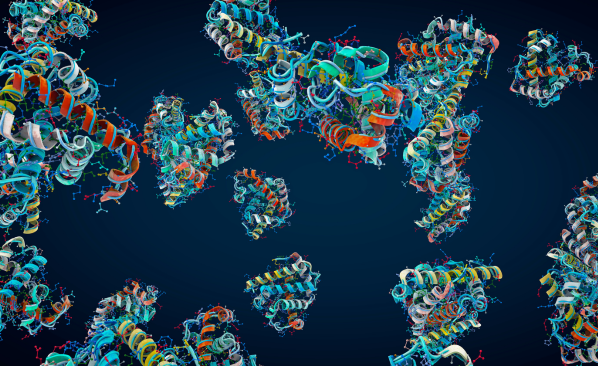
Proteins are biological macromolecules made up of one or more chains of amino acid sequences. They are present in all living cells. Most of them have a complex three-dimensional structure that determines their properties. They catalyse chemical reactions, strengthen the tissues of the human body (this is the role of collagen), play an important role in the functioning of the immune system, store oxygen (the role of myoglobin, a protein in the heart muscle), and so on. They can also surround the molecule of a drug to help it to enter a human cell. Families of new proteins are therefore set to play a growing role in pharmacology, for therapeutic uses, to produce biomaterials, etc. Biologists have long been convinced that determining the structure of proteins is an essential preliminary step in genetic and pharmacological research.
In 2021, a real technical breakthrough has come to their aid. Artificial intelligence using deep learning techniques has made it possible to “predict”, at great speed, the three-dimensional structure of molecules, particularly proteins, based on initial knowledge of some of the sequences of amino acid residues that they are made of (i.e. based on a limited number of these sequences).[1]
This method was developed by DeepMind, a subsidiary of Google known for its AlphaGo algorithm for playing the board game Go. DeepMind designed the AlphaFold algorithm using artificial intelligence with a deep learning technique. By 2022, after two years of work in collaboration with