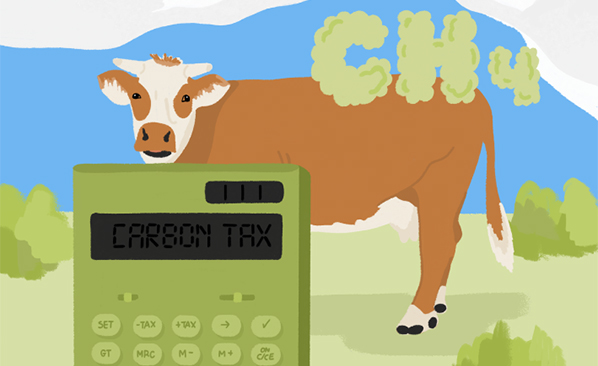
The agricultural sector is both one of the most affected by the impact of climate change and one of the main emitters of greenhouse gases (GHGs). To accelerate the reduction of emissions from livestock farming, Denmark is considering introducing a specific taxation system for the sector. The proposal, which still has to be passed by Parliament, would be a world first, but would raise questions about its applicability and impact on livestock farmers.
Denmark has set itself the target of reducing its emissions by 70% by 2030 compared to 1990 levels, and becoming carbon neutral by 2050. However, a quarter of the country’s greenhouse gas emissions come from agriculture, making it the biggest emitter. Livestock farming alone accounts for 11% of Denmark’s greenhouse gas emissions, two-thirds of which are generated by cattle. It is estimated that there are 1.4 million cows in Denmark today, and that each of them emits at least two tonnes of CO2 equivalent per year.[1].
If current trends continue, the agricultural sector could account for almost half of Denmark’s emissions by 2030, since they are not decreasing, unlike those of the country’s other sectors. Taxes have already been proposed for industry and the energy sector. The sector will therefore have to step up its mitigation efforts, and the proposed tax relies on coercion rather than proactive