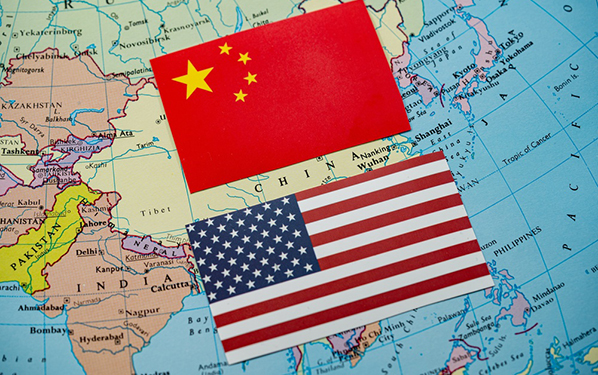
The notion of de-risking is increasingly present in the discourse of Western political leaders. In addition to a legitimate desire to mitigate the impact of new geopolitical disruptions on value chains, the concept is intended as a response to problematic dependencies on Beijing (critical metals, semi-conductors, etc.). It could lead to measures with serious consequences for any company trading with China.
Coined by the President of the European Commission, the concept of ‘de-risking’ was taken up in the United States in April 2023 by Jake Sullivan, Joe Biden’s National Security Adviser. In a speech given to the Brookings Institution, Sullivan justified the need for de-risking by observing the relative failure of happy globalisation as advocated by liberal philosophy: “Economic integration didn’t stop China from expanding its military ambitions in the region, or stop Russia from invading its democratic neighbors. Neither country had become more responsible or cooperative.” In a world where political pressure intensifies on international economic and financial ties, de-risking is less radical than other terms that have come into vogue in Europe in recent years: “Decoupling suggests a radical separation, whereas de-risking […] implies curbing risks while avoiding a clean break”, comments Agathe Demarais, senior policy fellow at the European Council on Foreign Relations. What remains to be done is to define more precisely what is meant by this term, which is sometimes criticised for its ambiguity.