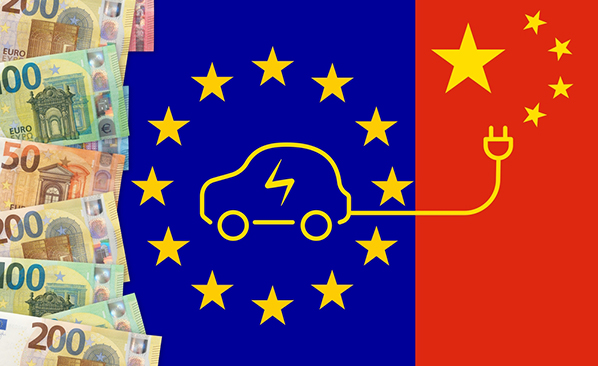
In June 2024, the European Commission delivered the initial conclusions of its investigation into the subsidy practices of the Chinese central and local governments to producers of electric vehicles (EVs). It considered that the nature and level of this support constituted an obstacle to free and undistorted competition on international markets, and provisionally adopted a massive increase in customs tariffs, which could reach 30% to 50% of the price of imported vehicles depending on the manufacturer (compared with 10% today). These protectionist measures apply both to Chinese brands and to foreign (including European) producers and assemblers operating in China as part of joint-ventures. On the other hand, Chinese brands producing outside China would not be subject to these tariffs.
The Commission’s decision follows that taken by US President Joe Biden to massively increase tariffs on a range of Chinese products and components deemed strategic for the energy and digital transitions. Imports of electric vehicles are subject to high tariffs (100%), as are the batteries and metals used in their production (up to 25 %).
The European Commission therefore appears to be aligning itself with the US position of increasing trade retaliation against China, but its motives differ because of a markedly different commercial and industrial context. In the United States, imports of Chinese-brand electric vehicles are currently insignificant. In contrast, the share of Chinese-made electric vehicles in European Union (EU) imports has risen sharply in recent years. Virtually nil in 2019, it reached 20% in 2023, all brands combined,